

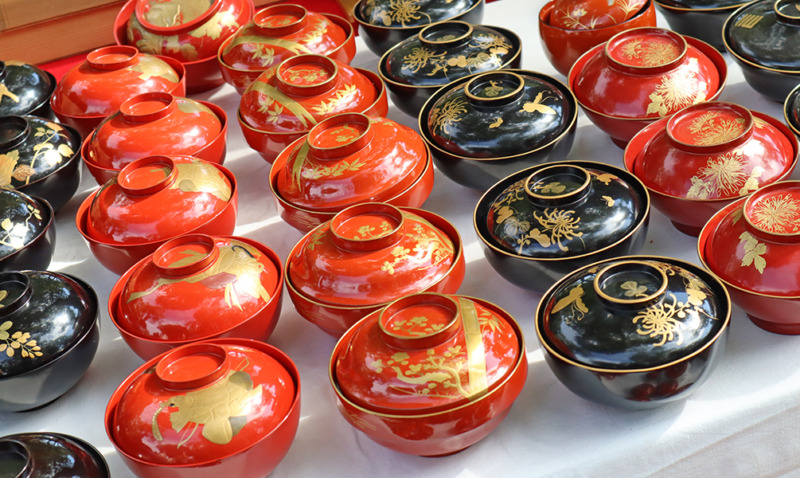
Recently, I visited an antique market with a friend from my urushi (Japanese lacquer) class.
In Japan, antique markets, also known as flea markets, bring together stalls selling a wide variety of old and vintage items, including traditional tools, kimonos, obis, hanging scrolls, paintings, lacquerware, ceramics, old books, works of art, and traditional household objects.
These markets are not intimidating, and even those who know little about antiques can enjoy browsing the stalls.
In recent years, I have noticed more international visitors, and the atmosphere seems to have become even more open and welcoming.
Antique markets usually start early in the morning, and many stalls begin closing by around 4 p.m. It is best to visit early if you want to take your time looking around.
Some days, I find nothing that particularly catches my eye. On other days, I fall in love with something at first sight and end up buying it unexpectedly.
The antique market we visited this time was held on the grounds of a Buddhist temple.
Although some vendors now accept credit cards, cash is still the most common method of payment. Some vendors may also be willing to offer a small discount when you pay in cash.
My original purpose was to look for wooden blanks for my lacquerwork class. However, I ended up buying Ko-Imari mukozuke dishes, five-sun plates (approximately 15 cm in diameter), and small Kutani ware plates instead.
Chatting with the stallholders and unexpectedly buying something completely different from what I had planned is all part of the fun.
At Japanese antique markets, the pleasure lies not only in discovering interesting objects, but also in meeting people and enjoying conversations with them.
Autumn is a wonderful season to visit antique markets in Japan. The pleasant weather makes it easy to spend a leisurely day strolling among the stalls and enjoying the atmosphere.