




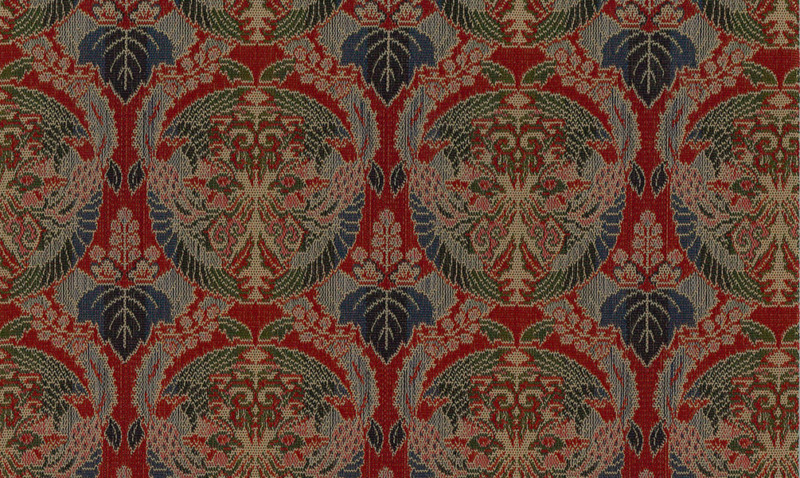
“My Favorite Kobukusa Pattern – Kiri ni Mukai Houou Maru-mon Nishiki”
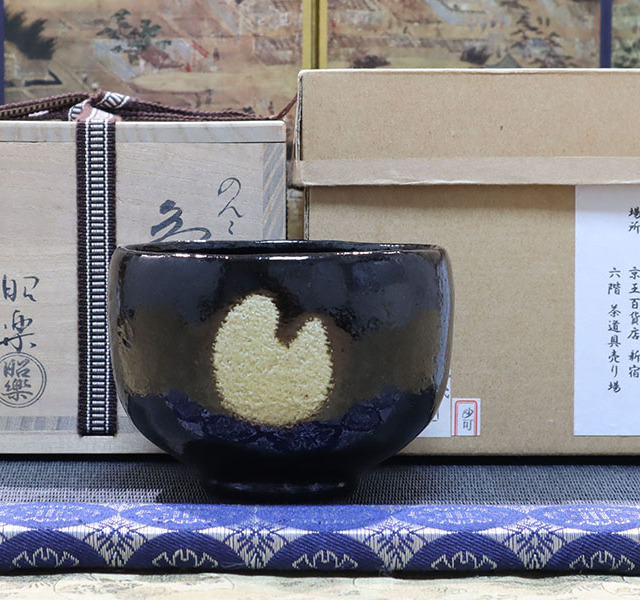
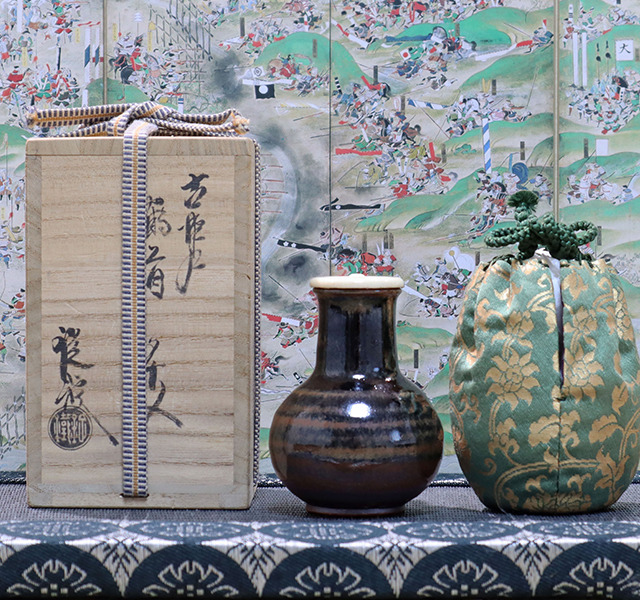
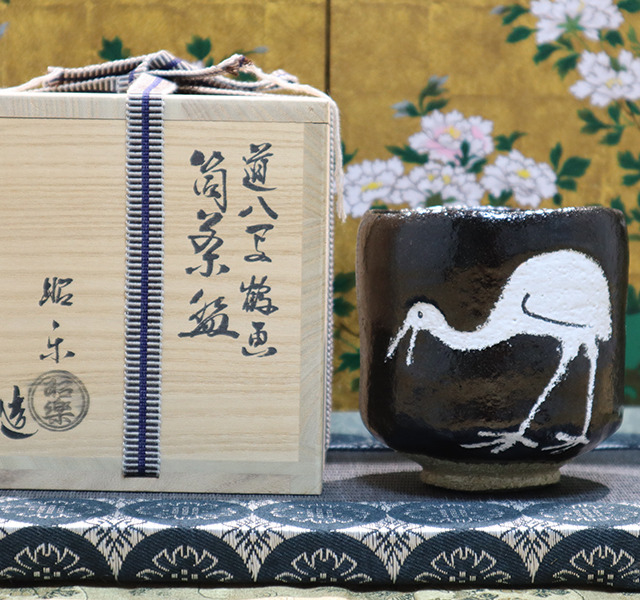
As many of you know, “kobukusa” play an important role in the handling and appreciation of valuable tea utensils. These small yet exquisite silk fabrics are not merely practical items; each carries a distinctive pattern with its own traditional name and history.
The fabric shown in the photo is produced by “TATSUMURA TEXTILE CO., LTD.“ in Kyoto, a company renowned for its refined reproductions of historical textiles.
This design features paulownia flowers and paired phoenixes enclosed within elegant roundels. It was modeled after a Kyogen costume that was donated to Mibu-dera Temple in 1850 by Yasujiro Osaka-ya and eight others.
Since ancient times, the phoenix has symbolized peace and prosperity. The combination of the paulownia and phoenix is considered an especially auspicious motif, expressing harmony, dignity, and good fortune.
“The Weaving Technique: Tatenishiki”
This fabric is woven using a traditional technique known as “tatenishiki” (warp brocade). In this method, both the ground and the patterns are created using warp threads.
For example, in a three-color design, three differently colored warp threads are grouped together as one set. By alternately raising and lowering these threads, the ground and the pattern emerge.
As the number of colors increases, so does the number of warp threads required, making the weaving process increasingly complex. While “tatenishiki” is typically woven with double warps (two colors), there are also examples created with quadruple warps (four colors) and even six-layered warps (six colors). Such textiles demonstrate remarkable craftsmanship and technical mastery.
I hope you will discover your own favorite pattern and perhaps welcome one into your home — a small yet meaningful way to beautifully highlight and honor your treasured tea utensils.






No comments yet.