

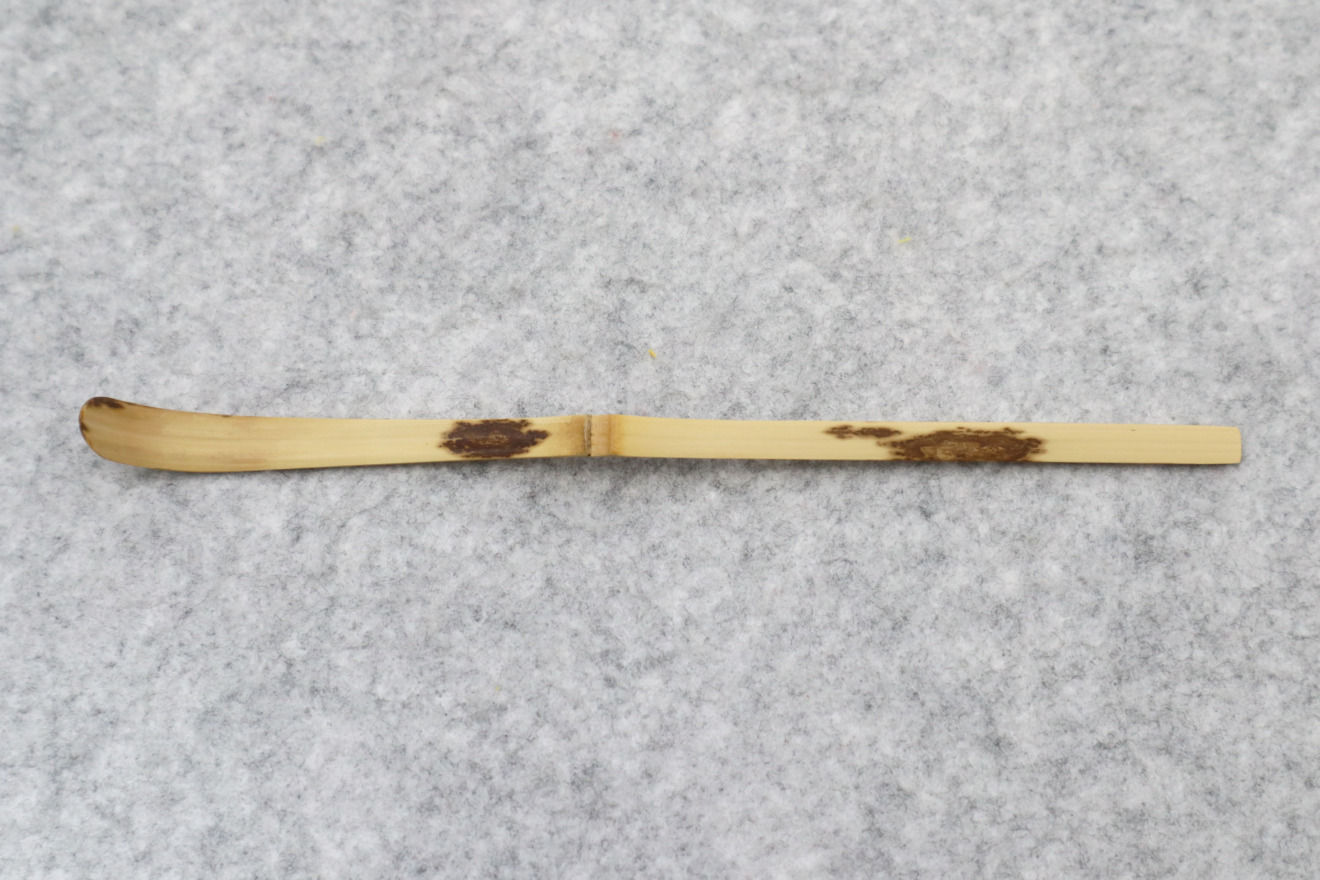
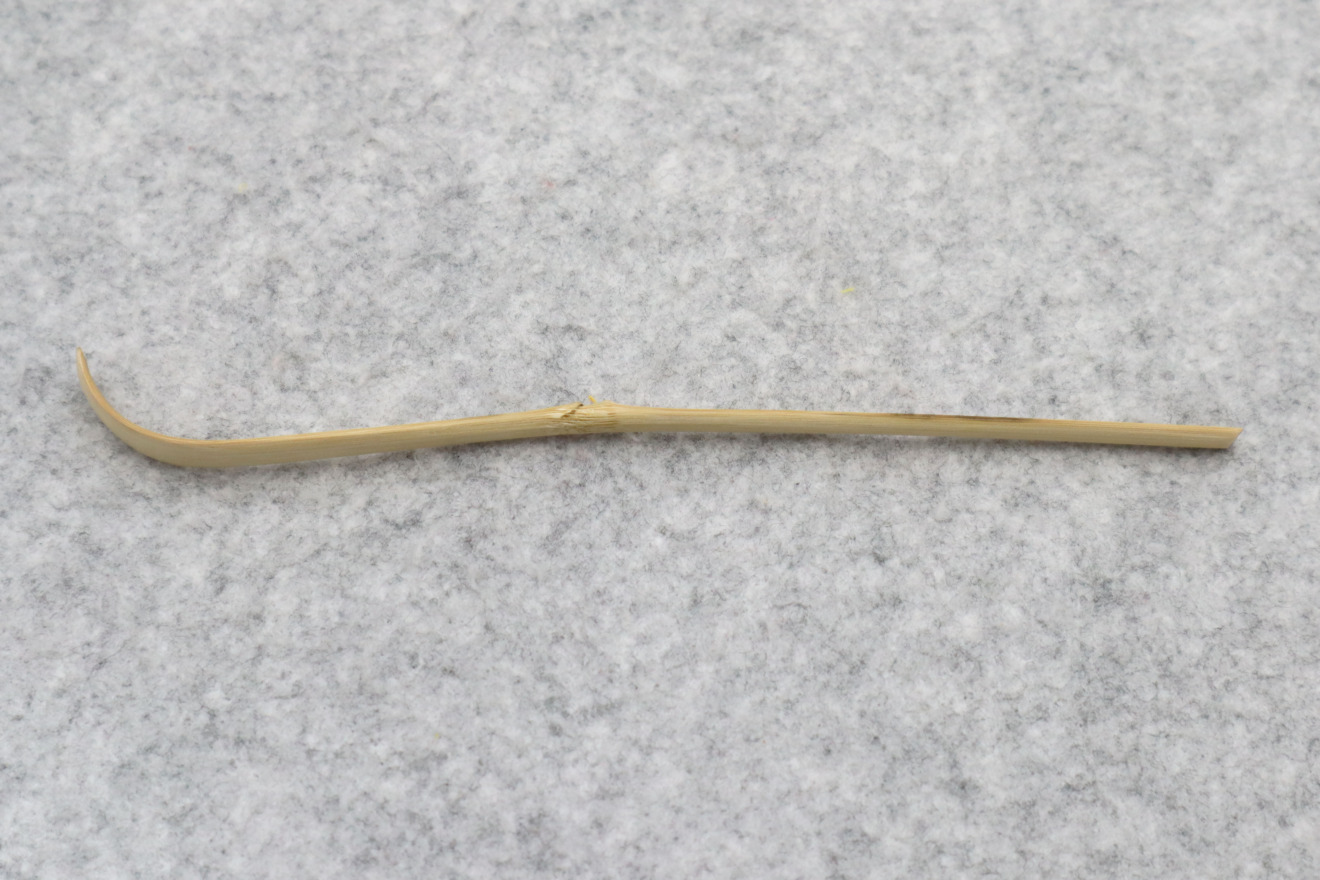
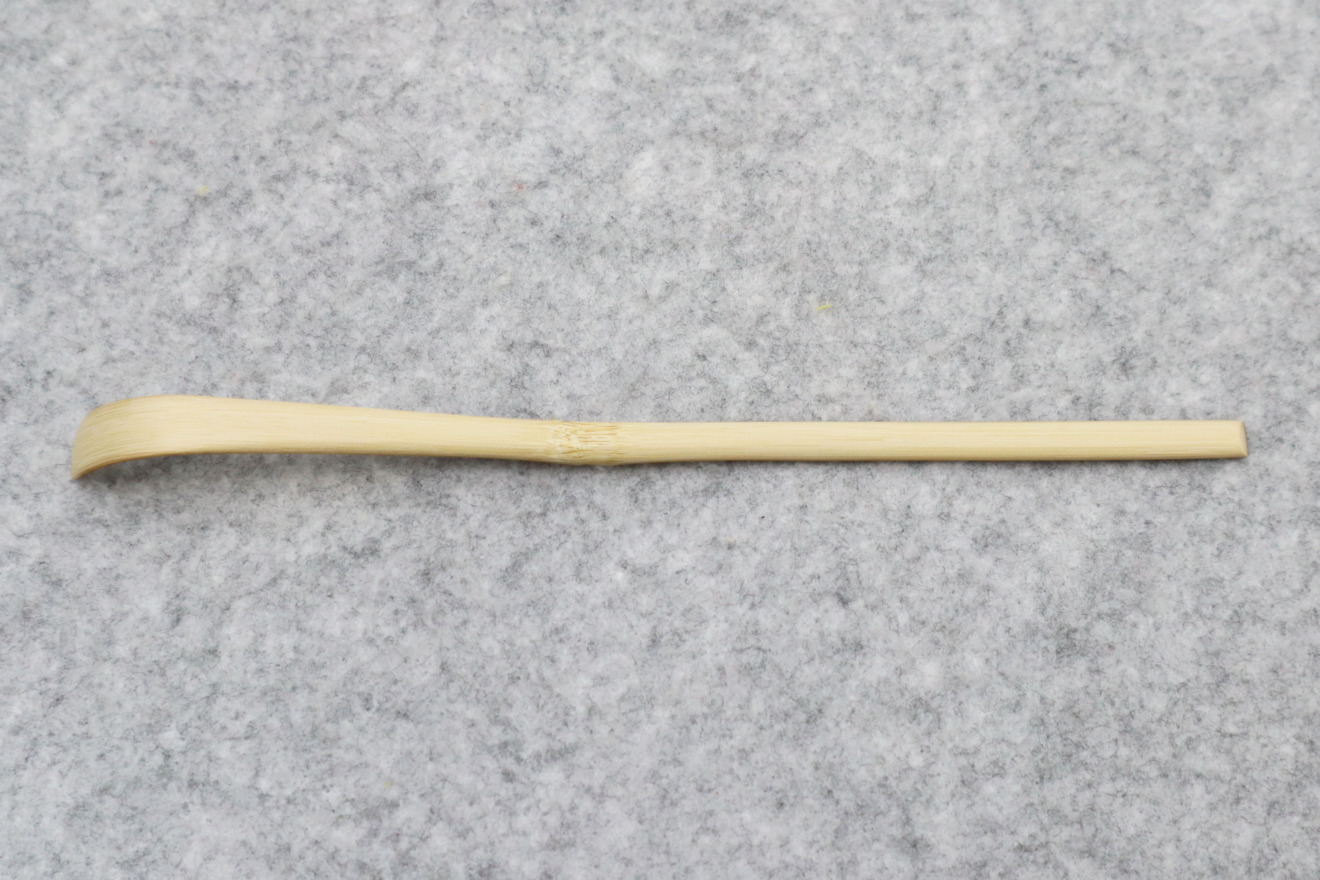
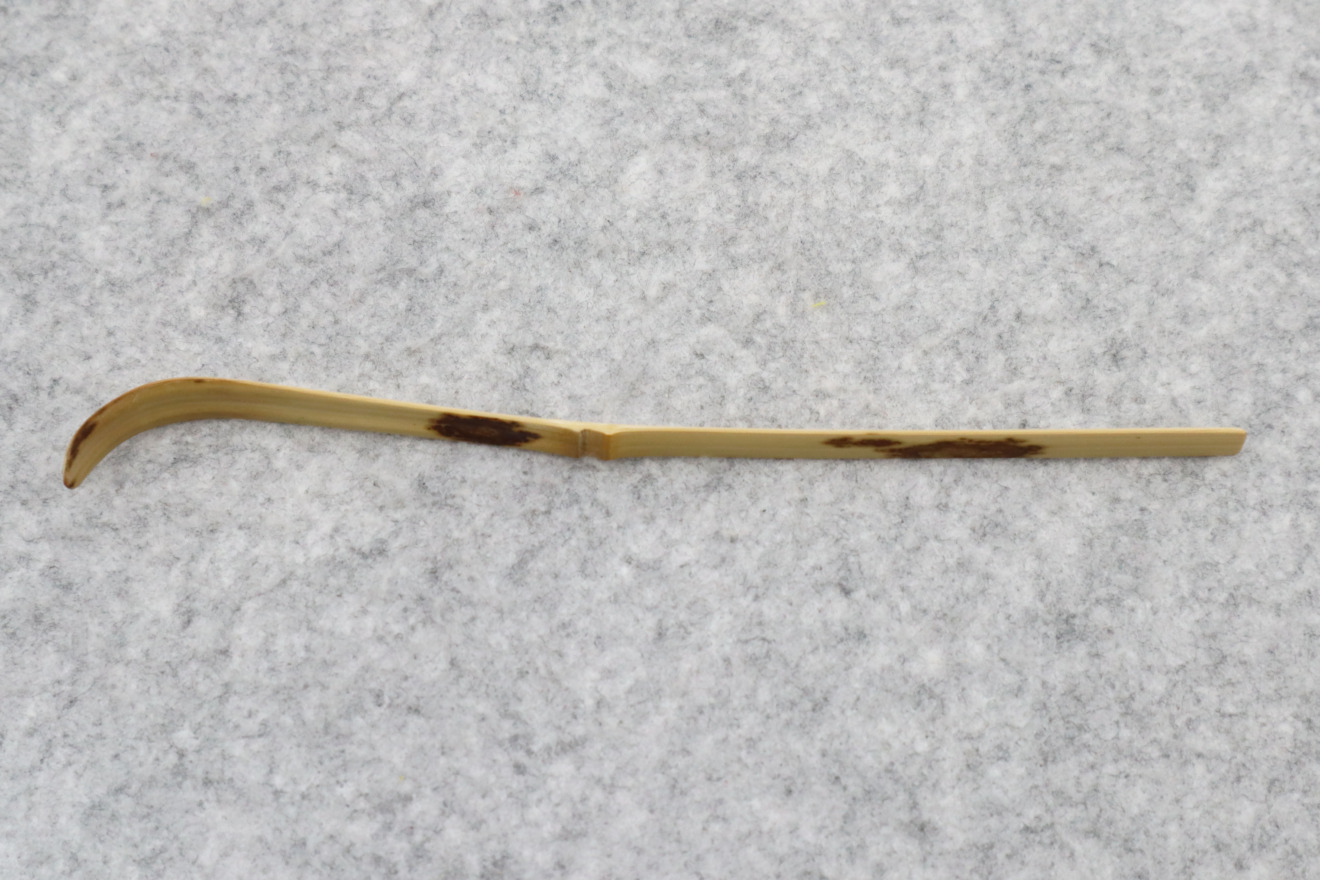
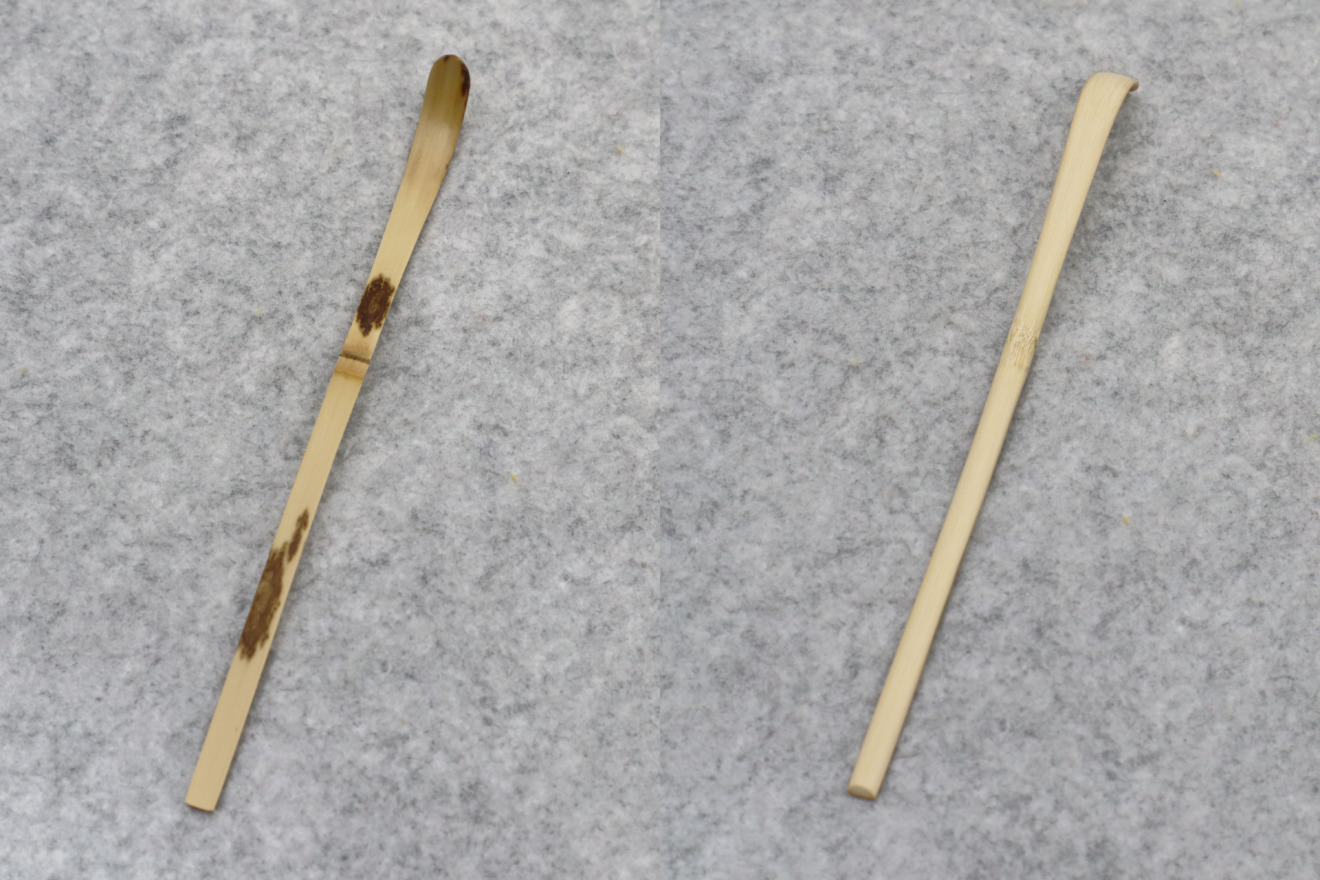
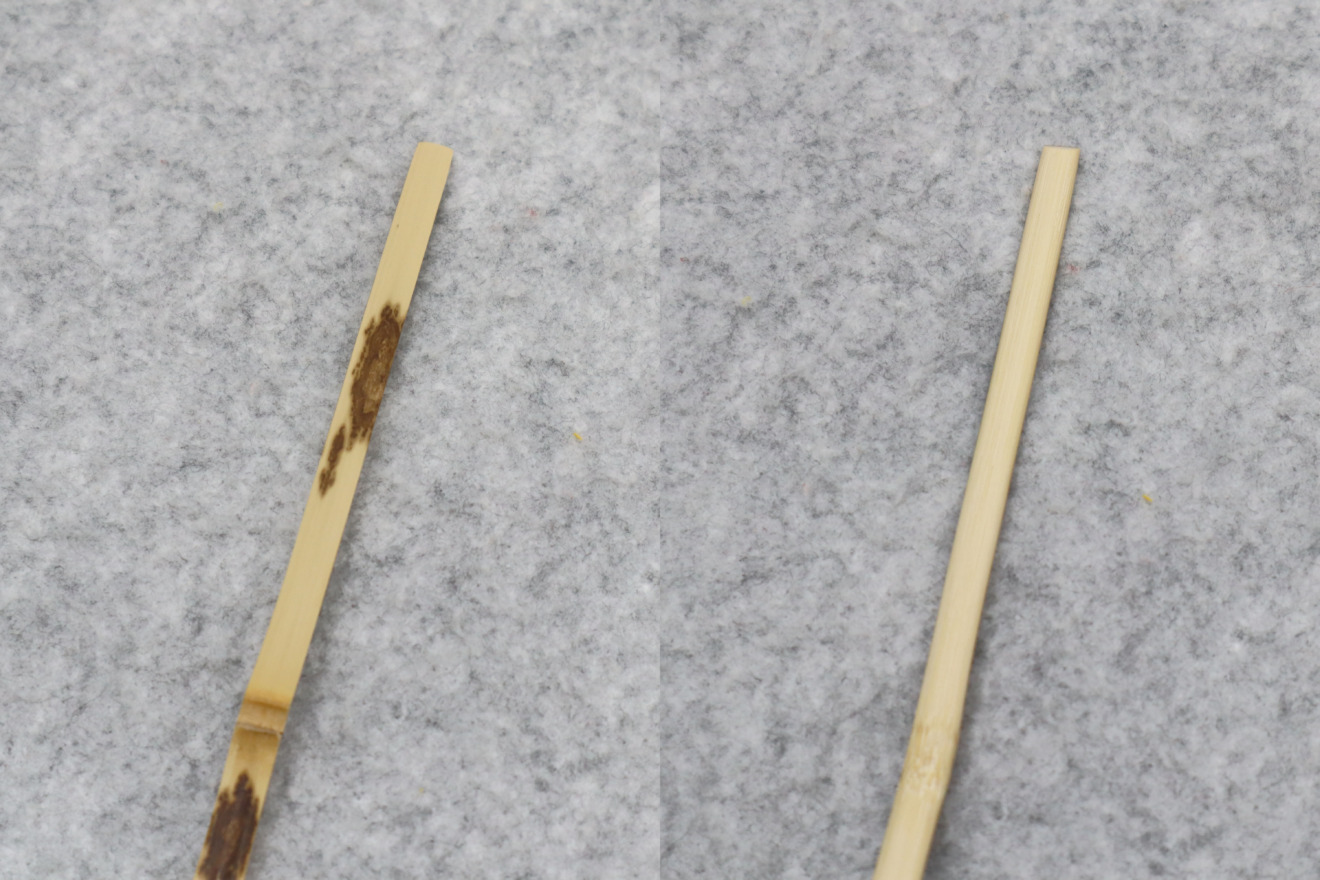
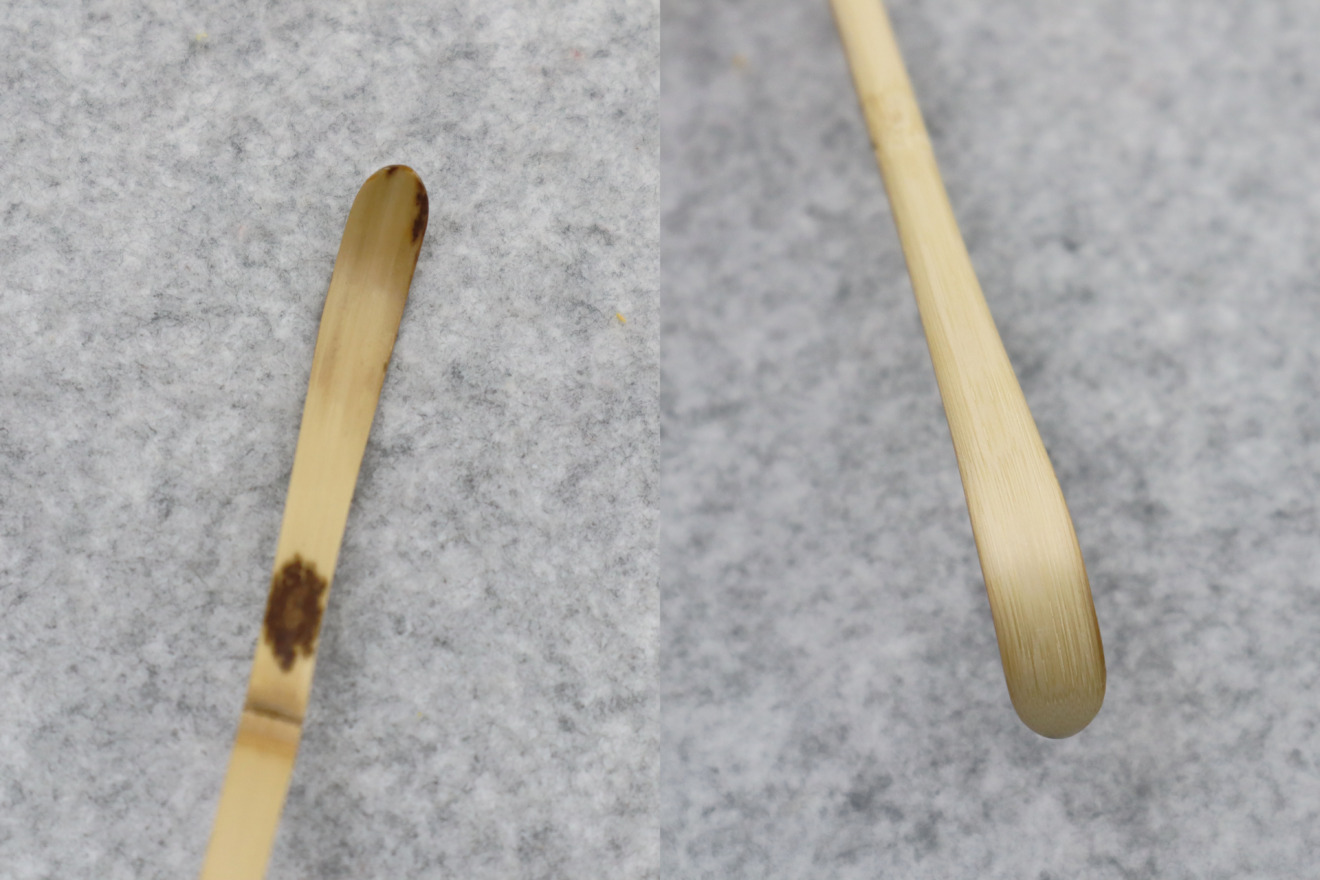
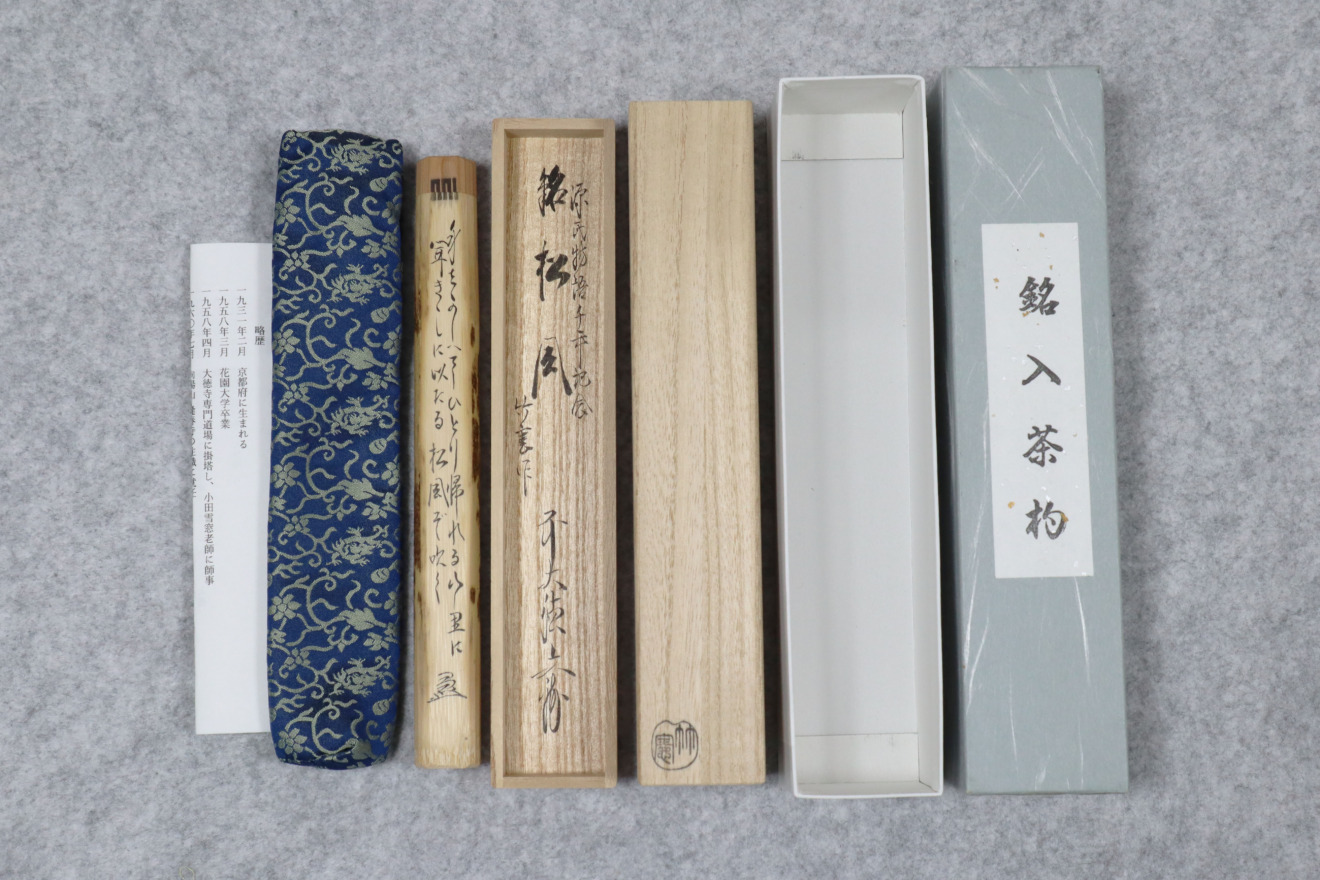
Vintage Chashaku Tea Scoop, Daitokuji Temple, Noritani Bunga, Miyashita Chikuken, Name- Shōfū, Matcha Bamboo Scoop
MS-090801
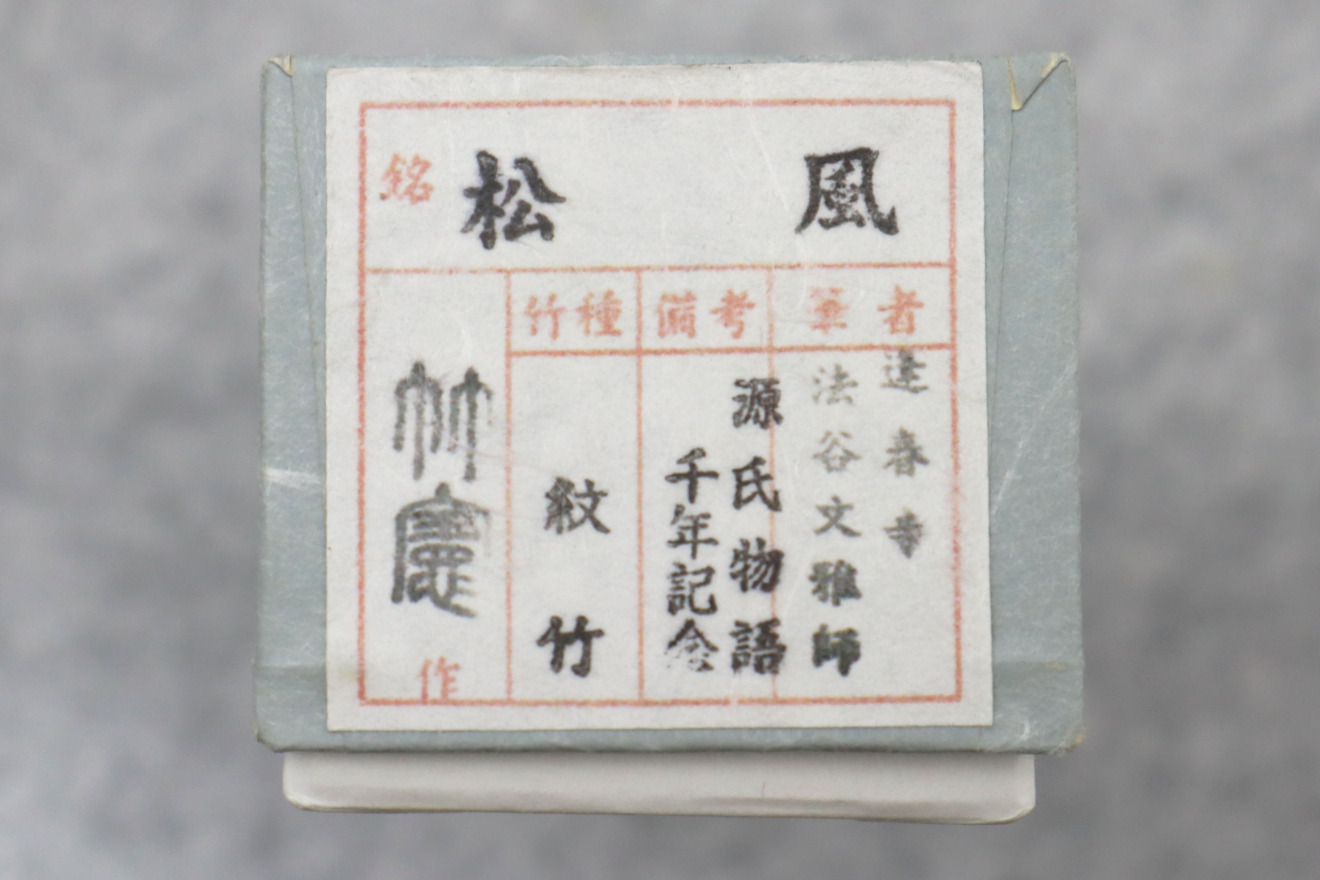
The Chashaku Tea Scoop was named “Shōfū” by Noritani Bunga.
Venerable Noritani Bunga was born in Kyoto Prefecture in February 1931.
In March 1958, he graduated from Hanazono University, an institution deeply rooted in the Rinzai Zen tradition.
That same year, in April, he entered the Daitokuji Monastic Training Hall (Daitokuji Senmon Dōjō), where he devoted himself to rigorous Zen training under the guidance of the late Master Oda Sessō Rōshi.
In July 1960, he was appointed resident priest of Kōyōzan Hōshunji Temple.
In September 1982, he received formal recognition as Zenju-i Hinjō (former abbot in succession), and in October 1998, he was appointed as a member of the Religious Assembly of the Daitokuji Branch of the Rinzai Zen School.
Throughout his life, Venerable Noritani has walked the path of Zen with quiet strength and humility, continuing to preserve the spirit of practice and the compassionate guidance of the Daitokuji lineage.
Kōyōzan Hōshunji Temple
A Temple of the Daitokuji Branch, Rinzai Zen School
Kōyōzan Hōshunji Temple is located in Hiyoshi-chō, Nantan City, Kyoto Prefecture, and belongs to the Daitokuji branch of the Rinzai Zen school.
The temple’s mountain name (sangō) is Kōyōzan, meaning “Mountain Facing the Sun.”
According to temple tradition, Hōshunji was founded during the Jōkyō era (1684–1687) by Zen Master Shinchiennō, the 222nd abbot of Daitokuji, together with the Great Master Gaidō Sōkō Oshō.
Since its founding, the temple has served as a place of Zen practice and as a spiritual center for the local community, nurturing the Rinzai spirit of simplicity, awareness, and compassion for over three centuries.
Even today, Hōshunji continues to uphold the teachings and meditative tradition of Daitokuji, providing a quiet space for reflection and practice amidst the natural beauty of the Kyoto countryside.
Based cutting by Miyashita Chikuken
Miyashita Chikuken is Bamboo Artisan and Maker of Tea Utensils
Born in Kagawa Prefecture in June 1946, Miyashita Chikuken is a bamboo craftsman dedicated to the creation of tea utensils that embody both simplicity and quiet elegance.
Since beginning his work in bamboo craft in 1973, he has specialized in producing tea utensils that bring out the natural beauty and character of the material — from the pure tones of white bamboo (shiratake) to the rich hues of smoked bamboo (susutake), the delicate speckling of gomadake, and the unique textures of twisted bamboo (shibochiku).
Miyashita also creates chashaku (tea scoops), including masterful reproductions of classical works and pieces bearing the calligraphic inscriptions (mei) of Zen Master Noritani Bunga. His work reflects both the refined aesthetics of the tea ceremony and the living vitality of the bamboo itself.
He was selected for the Kyoto Industrial Arts and Technology Exhibition in 1983 and 1985 in the Bamboo Flower Vase category. After becoming independent in 1996, he held his first solo exhibition at Musōan Gallery in Kyoto in 1997.
The word “Shōfū” refers to the wind that sweeps through the pine branches, or more specifically, to the sound of that wind as it stirs the pine needles.
In Zen expression, we find phrases such as “Shōfū sassatsu no koe” (the murmuring voice of the pine wind) and “Kanza shite shōfū o kiku” (sitting quietly, listening to the wind in the pines).
These expressions suggest a state in which one sets aside all worldly thoughts and desires, simply listening with a tranquil heart to the sound of the pine wind.
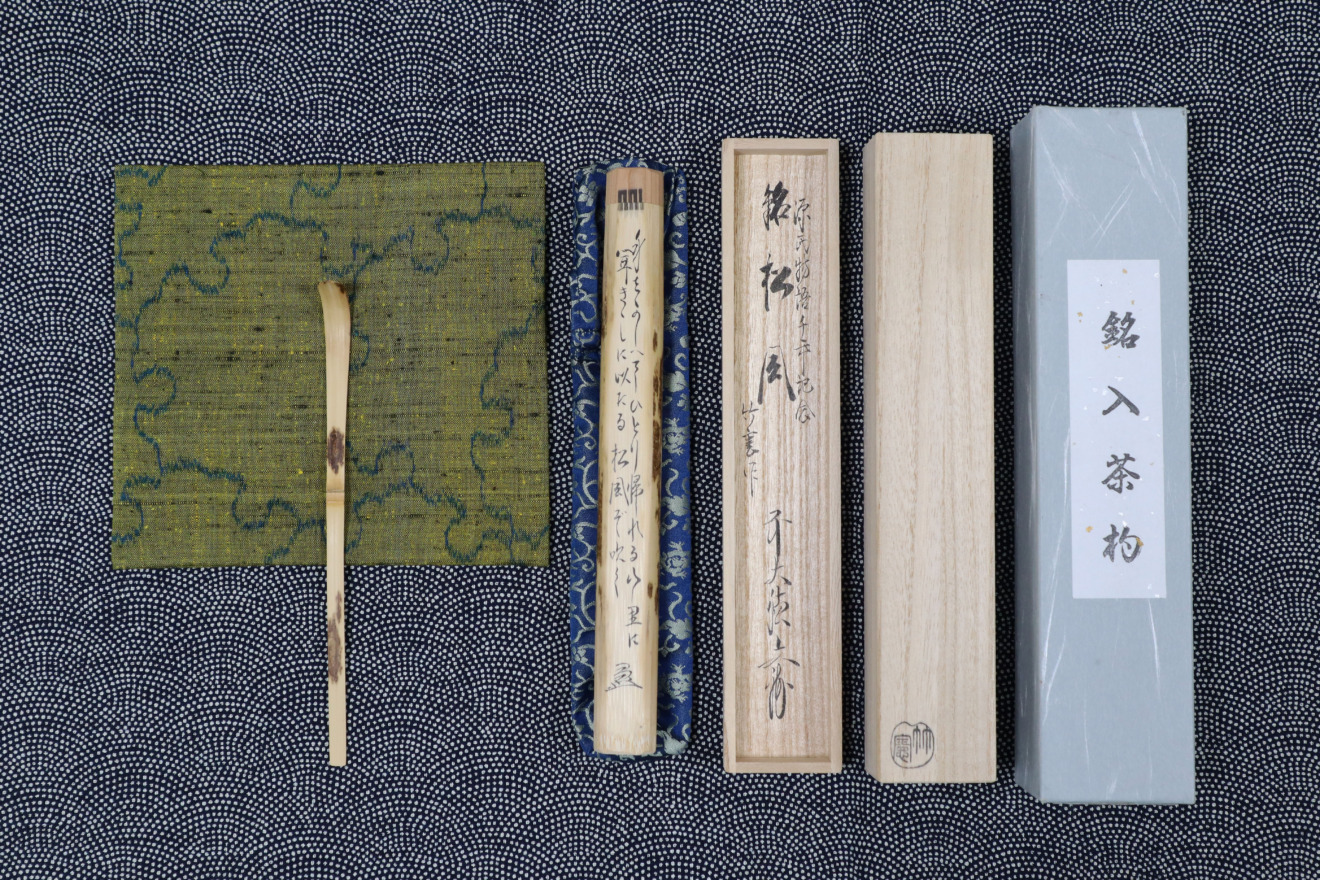
This Chashaku Tea Scoop is perfect shape and made by a beautiful Monchiku.
It is in excellent vintage condition consistent with age. (Unused)
It comes with original tube, original silk shifuku, original paulownia box, original paper box with title.
You are able to use this Chashaku for your Tea Ceremonies.
It is also suitable for Zen lovers.
The word “Shōfū” also holds a deep connection with the “Way of Tea”.
In the tearoom, the gentle “shun-shun” sound of water boiling in the iron kettle is poetically likened to the wind blowing through pines — hence, it is called “Shōfū” or “Shorai”.
The bamboo tube accompanying this tea scoop bears a poem from The Tale of Genji, Chapter 18, “Matsukaze (Shofu)” (The Wind in the Pines).
Mi o kaete hitori kaereru yamazato ni kikishi ni nitaru matsukaze zo fuku
“I had changed my worldly life and returned alone to the mountain retreat as a nun. I hear the wind in the pines once more. The same sound I once knew on the shore of Akashi.”
This verse reflects the serenity of renunciation and the constancy of nature.
Though the world and one’s circumstances may change, the “wind through the pines” continues to blow unchanged, mirroring the quiet clarity of the awakened heart.
It is excellent vintage condition consistent with age.
It comes with original tube, original paulownia box with title and original paper box.
You are able to use this Chashaku for your Tea Ceremonies.
It is also suitable for Zen lovers.
Measurement
Chashaku
Wide: 1.0cm / 0 25/64”
Length: 18.4cm / 7 1/4”
Weight: 2g
Tube
Wide: 2cm / 0 25/32”
Length: 21.7cm / 8 35/64”
Height: 1.9cm / 0 3/4”
Weight: 29g
Box
Wide: 4.3cm / 1 11/16”
Length: 23.5cm / 9 1/4”
Height: 4.8cm / 1 57/64”
Weight: 67g
Paper Box
Wide 5.4cm / 2 1/8”
Length 25.0cm / 9 27/32”
Height: 5cm / 1 31/32”
Weight: 69g
Age: 2008
Material (Chashaku): Bamboo
Chashaku artist: Miyashita Chikuken
Color: Leghorn, Biscuit, Beige, Dark Brown
Material (Shifuku): Silk
Pattern: Jouou Donsu (Silk Fabric Made by Kitamura Tokusai Fukusa Ten)
Condition: Excellent vintage condition consistent with age. (Unused)
* Original paulownia box
* Original tube
* Original silk shifuku
* Original paper box
* Guide paper
* Guarantee sticker
* Title
* Inscription
* No splits
* Almost no discoloration on the tube and wooden. (Refer to No. 10 Photo)
* Almost no fabric discoloration. (Refer to No. 10 Photo)
* Almost no discoloration on the paper box. (Refer to No. 10 Photo)
* You may find “minor scratch or chips” on tube, wooden box and paper box.
*** If you have any questions about the condition or would like additional photos, please contact us before purchasing. ***