

Kobukusa (古帛紗) is a small decorative cloth used in the Japanese tea ceremony when handling or viewing treasured tea utensils, such as tea caddies, tea bowls, tea scoops, and incense containers. It helps protect the utensils and provides a beautiful background when they are presented for close examination.
A Kobukusa is slightly rectangular rather than square. Its typical dimensions are approximately 14.8–15.3 cm in height and 15.8–16.3 cm in width.
One interesting detail is the way it is made. In traditional hand-sewn examples, one edge is formed by folding the fabric rather than cutting it, leaving that side without a seam. The remaining edges can be sewn with a single continuous thread.
Kobukusa are often made from beautiful silk fabrics, including Kinran, Donsu, Kando, and Nishiki. Some traditional designs also bear names associated with celebrated tea masters, such as Jyouo. These treasured textiles, known as Meibutsu-gire, have long been appreciated in the world of tea.
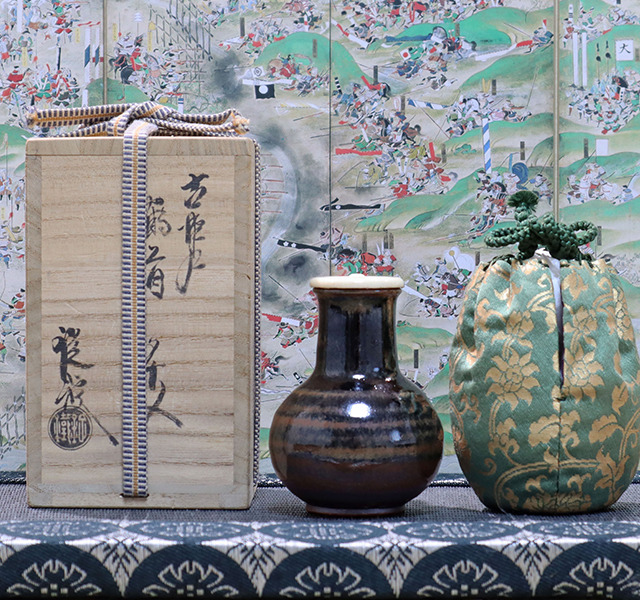
Such fabrics are also used for shifuku (pouches for tea utensils), dashifukusa (larger ceremonial cloths), and the mounting of hanging scrolls.
Even those who do not practice the tea ceremony can appreciate a Kobukusa as a small decorative textile or a keepsake from Japan. Those who enjoy sewing might also try making their own.
Many traditional textile patterns have distinctive names connected with their designs, histories, or former owners. Learning about these names adds another dimension to the appreciation of Japanese textiles. Books on tea ceremony fabrics can also deepen our understanding of patterns found in kimono and obi.
Two books from my collection:
Cha no Kireji Meikan (茶の裂地名鑑), Tankosha, 2001. ISBN: 9784473018168.
Meibutsu-gire Handbook (名物裂ハンドブック), Tankosha, 2013. ISBN: 9784473039187.