

Wari-Kodai (割高台), meaning “split foot,” refers to a distinctive foot design found on certain tea bowls. The kodai is the raised base on the underside of a bowl. In Wari-Kodai, cuts or notches divide the foot, sometimes forming a cross-shaped design.
Some Wari-Kodai bowls have an uncarved centre divided by cross-shaped cuts, while others have a ring-shaped foot with several sections removed. These variations give the base a bold, sculptural appearance.
Wari-Kodai is associated with Korean tea bowls that were admired in Japan and can also be seen in Japanese pottery, including Hagi ware. Some historical Korean examples were especially prized by samurai tea practitioners.
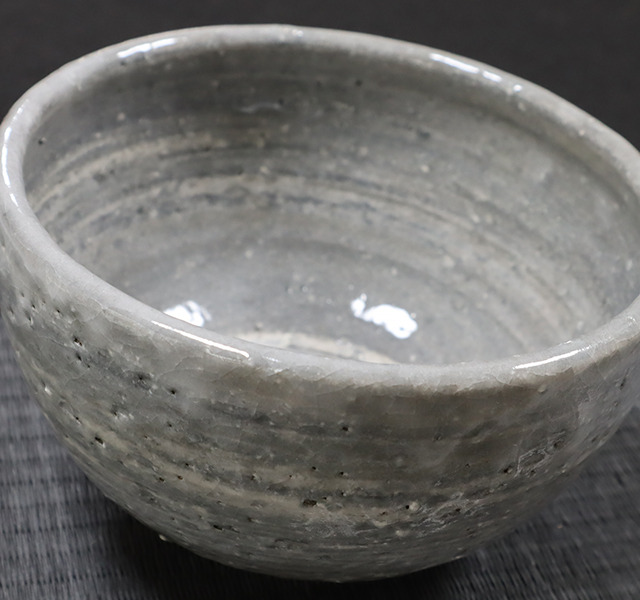
The photograph shows a Wari-Kodai matcha tea bowl by the Hagi ware potter Morishige Eitetsu (1930–2016).