

Many Japanese ceramic matcha bowls are more porous and absorbent than porcelain. Understanding this characteristic is an important part of caring for them.
You may have read that every newly purchased Japanese tea bowl should be treated with rice-rinsing water or diluted flour before use. This traditional process is called medome.
However, medome is not always necessary. Before treating a tea bowl, it is worth understanding how the particular ceramic behaves when it comes into contact with water.
Before First Use: Is Medome Necessary?
Medome is a traditional treatment that uses starch from rice-rinsing water or flour to help fill tiny pores in ceramic clay. It can reduce water seepage, staining, and the absorption of odors.
Although medome has long been a common practice in Japan, starch remaining in porous clay may contribute to mold or unpleasant odors, especially if the bowl is stored before it has dried thoroughly. If medome is performed, the bowl should be rinsed carefully and allowed to dry completely before storage.
Different types of Japanese pottery have different levels of absorbency. Some bowls may benefit from this treatment, while others can be used without it.
For a sound, newly made tea bowl, a simple first step is to rinse it gently with clean, room-temperature or lukewarm water. You can also place the bowl on a dry surface, add some clean water, and check whether any water seeps through.
If no leakage is observed, there is no reason to assume that starch-based medome must automatically be performed. Some makers may still recommend it to reduce staining, so their instructions should take priority.
If water does seep through the bowl, medome may be worth considering, depending on the type of pottery. However, leakage may also result from damage or cracks. In such cases, consult the maker or seller rather than attempting to seal the bowl yourself.
For antique, repaired, or particularly fragile tea bowls, avoid soaking or boiling without appropriate advice.
Before Each Use: Why Moistening Matters
There is another simple practice that is useful even when medome is unnecessary: allowing a porous tea bowl to absorb a little clean water before preparing matcha.
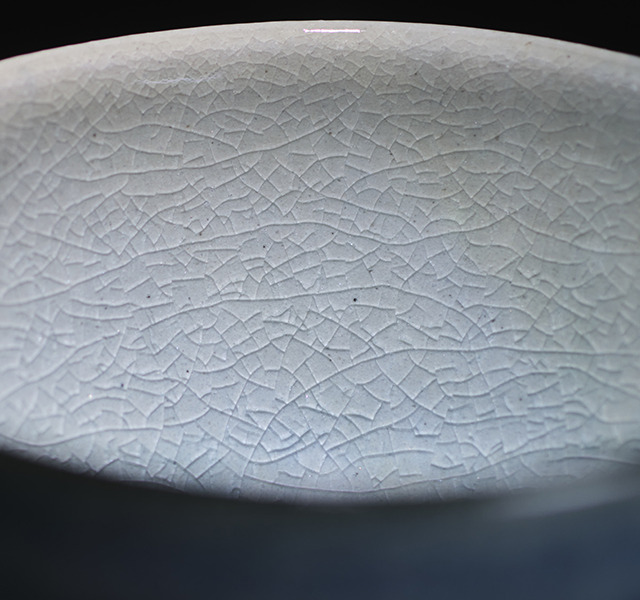
When dry clay absorbs clean water first, it may absorb less of the strongly colored tea that follows. This can help reduce staining, particularly in ceramics with fine cracks in the glaze known as Kannyu (貫入).
Before preparing matcha, gently rinse or briefly moisten the bowl with clean, lukewarm water. This also helps warm the bowl gradually and removes dust from its surface.
The same principle applies to many Japanese ceramic plates and serving dishes. Moistening an absorbent dish before use can help reduce the penetration of sauces, oils, and other food liquids, making the dish easier to clean afterward.
This practice does not permanently seal the clay or completely prevent staining. However, it is a simple way to help care for porous ceramics in everyday use.
After Use
Wash the bowl gently by hand as soon as reasonably possible after use.
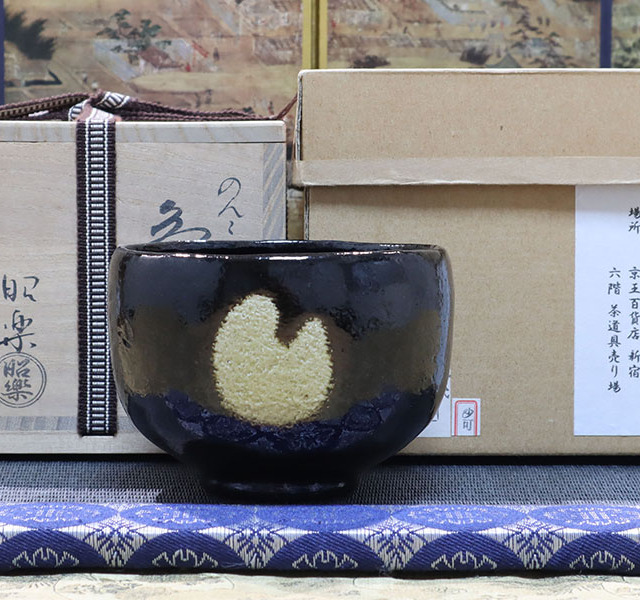
Use clean lukewarm water and your hands or a soft cloth to remove any remaining matcha. For highly porous ceramics, particularly Raku ware, avoid dishwashing detergent unless the maker recommends it, as residues or fragrances may remain in the clay.
Avoid abrasive sponges, cleansers, and strong rubbing. Fragile handmade bowls should not be placed in a dishwasher or microwave.
Extra care is also needed with bowls decorated with gold, silver, or overglaze painting.
Drying and Storage
Thorough drying is one of the most important parts of caring for a ceramic matcha bowl.
After washing, allow excess water to drain and leave the bowl to dry naturally in a well-ventilated, shaded place.
Even when the surface appears dry, moisture may remain inside the clay. Highly porous bowls can require several days, and sometimes up to a week, to dry completely, depending on the season and humidity.
Returning a bowl to its wooden storage box before it is thoroughly dry may cause mold or unpleasant odors. This is especially important after starch-based medome, as residual starch and moisture may encourage mold growth.
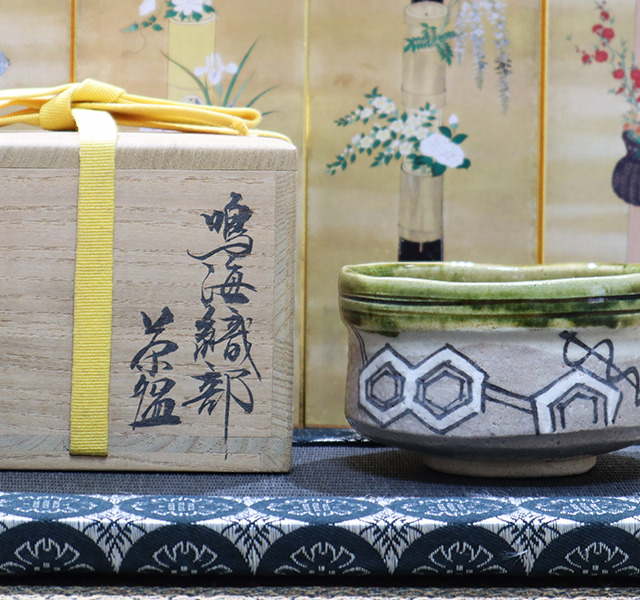
For long-term storage, avoid sealing the bowl in plastic or other non-breathable materials. Once completely dry, the bowl can be stored in a soft, breathable cloth and a wooden box, such as a Tomobako (original signed paulownia box), if provided.
Enjoying the Bowl Over Time
Many Japanese ceramics gradually develop subtle changes in color and character through use. This natural aging is part of the pleasure of living with handmade pottery.
Understanding the nature of your bowl, moistening it before use when appropriate, washing it gently, and allowing it to dry thoroughly will help you enjoy its beauty for many years.
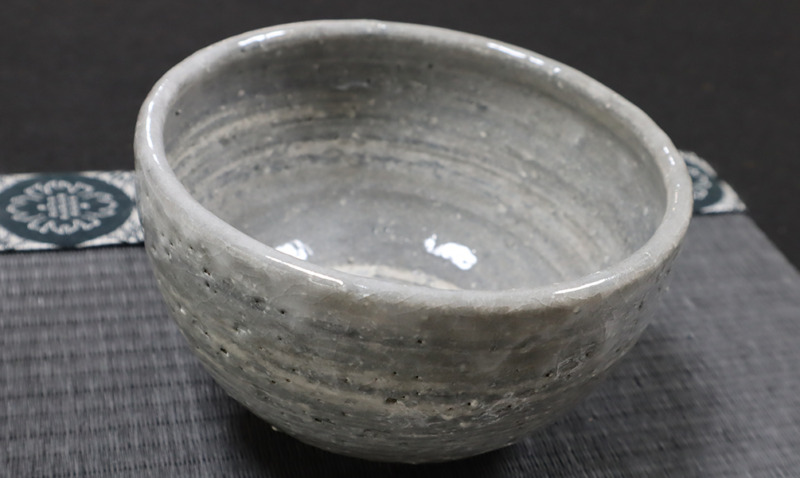
The photograph shows a Hakeme Chawan.