

“Ko-Seto Tsurukubi Chaire”
Among the most celebrated examples of Tsurukubi chaire are the “Rikyu Tsurukubi,” “Honganji Tsurukubi,” “Yoro Tsurukubi,” and “Ryukoin Tsurukubi.” These are distinct historical tea caddies that have long been admired by tea practitioners.
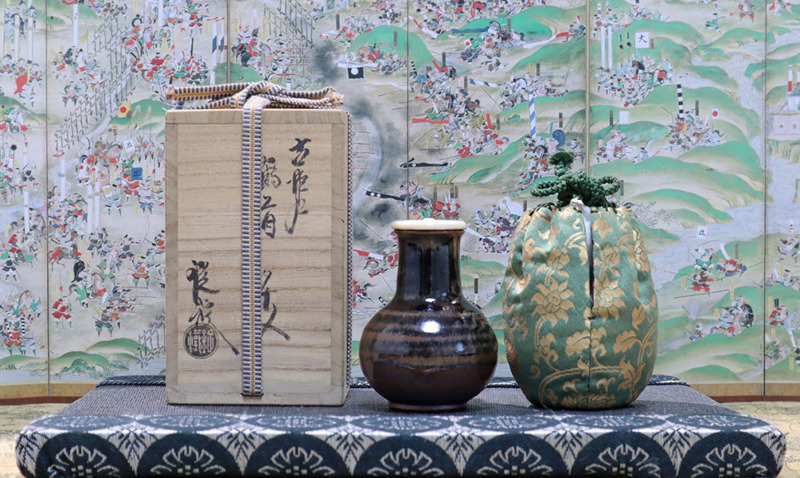
The tea caddy shown here is a Ko-Seto-style Tsurukubi chaire by Yamaguchi Jotetsu II. Its Tomobako (original paulownia box) is inscribed “Ko-Seto Tsurukubi Chaire” (古瀬戸 鶴首茶入). The original is traditionally regarded as an Ōmeibutsu (大名物), a tea utensil of exceptional historical importance. Its name comes from its association with Sen no Rikyu, who is said to have owned it.
The Tsurukubi form is distinguished by its rounded body and long, slender neck, which resembles the graceful neck of a crane. The word “tsurukubi” literally means “crane’s neck.”
This reproduction is finished with a traditional Ko-Seto glaze. Glazes of this type contain iron-bearing materials, such as onita, and may also use feldspar and wood ash. Depending on the composition and firing conditions, they can develop rich shades of amber, reddish brown, dark brown, and nearly black.
The depth of color and subdued appearance of Ko-Seto glaze have long been appreciated in Japanese tea ceramics, particularly tea caddies.
The photograph shows a tea caddy by Yamaguchi Jotetsu II (1920–1999).