





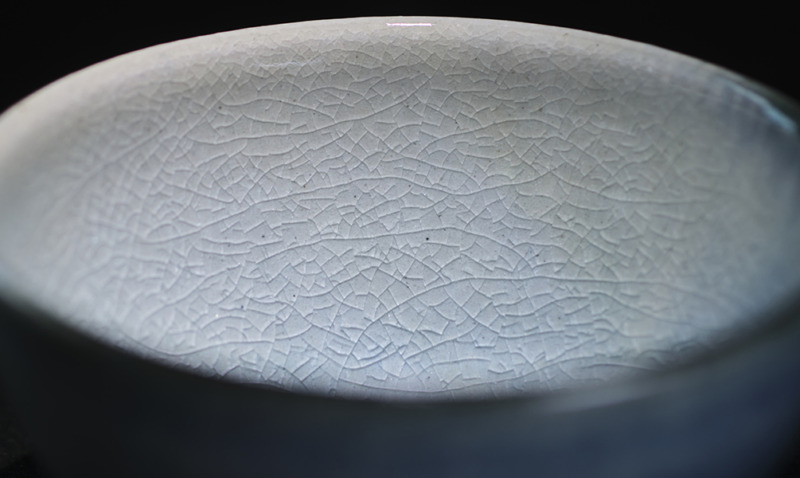
Fine, intricate lines resembling a delicate network of cracks can sometimes be seen on the surface of Japanese ceramics. These patterns are known as Kannyu (貫入), a Japanese term for the fine cracks that develop within the glaze covering a ceramic vessel.
In English, this phenomenon is known as “crazing,” while glazes that intentionally feature these decorative patterns are often referred to as “crackle glazes.”
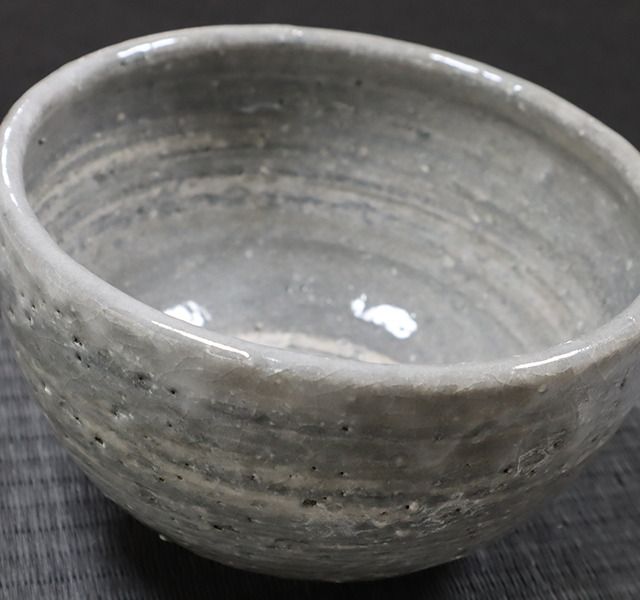
Kannyu can be found in various types of Japanese ceramics, including Hagi ware, Kyo ware, Shino ware (a type of Mino ware), and certain celadon-glazed pieces. However, not every piece develops these patterns, as their appearance depends on the clay, glaze, and firing conditions.
How Does Kannyu Develop?
Ceramic vessels are formed from clay, coated with glaze, and fired at high temperatures in a kiln.
As a vessel cools after firing, both the clay body and the glaze contract. Because these materials have different rates of thermal expansion and contraction, tension can develop within the glaze. When the glaze contracts more than the clay body beneath it, a network of fine cracks may form in the glaze layer. This is known as Kannyu.
These patterns may develop while a vessel is cooling inside the kiln or after it has been removed. In some cases, new crackle lines continue to appear days, weeks, or even longer after firing.
As the fine cracks form, a delicate, clear “ping, ping” sound can sometimes be heard, rather like the gentle ringing of a small wind chime.
The size, shape, and arrangement of these patterns depend on the properties of the clay and glaze, as well as the firing conditions. Even pieces made with the same materials and fired in the same kiln can develop distinctly different patterns.
Is Kannyu the Same as a Crack in the Pottery?
Kannyu occurs within the glaze layer and is different from a crack that extends through the clay body of a vessel.
However, the fine openings in the glaze allow water, tea, and other liquids to enter. In porous ceramics, particularly Hagi ware, moisture can penetrate through these openings and be absorbed into the clay body.
The absorption of moisture does not necessarily mean that water will leak through the vessel. Nevertheless, depending on the properties of the clay and the firing conditions, moisture may sometimes seep through to the outside.
For this reason, ceramics with Kannyu should be carefully washed and thoroughly dried after use.
The Beauty of Kannyu as It Changes Over Time
In Japanese ceramics, Kannyu has long been appreciated not simply as a network of fine cracks, but as an element that contributes to the character and beauty of a vessel.
As tea and other liquids gradually enter the fine openings in the glaze, the crackle patterns may become more pronounced, subtly changing the colour and appearance of the pottery over time.
This transformation is particularly associated with Hagi ware, where it is known as Hagi no Nanabake (萩の七化け), often translated as “The Seven Changes of Hagi Ware.”
The expression describes the gradual changes in colour and character that develop through years of use, a quality traditionally appreciated by those who practise the Japanese tea ceremony.
Such changes also reflect the Japanese aesthetic of Wabi-Sabi, which finds beauty in imperfection, the passage of time, and the natural changes that occur with age.
Some crackle patterns form intricate networks of very fine lines, while others create larger, more widely spaced patterns.
Each piece develops its own distinctive appearance, and some continue to change subtly over the years.
Kannyu is one of the many characteristics that reveal the natural beauty of Japanese ceramics and the pleasure of appreciating a vessel as it develops its own character through use.
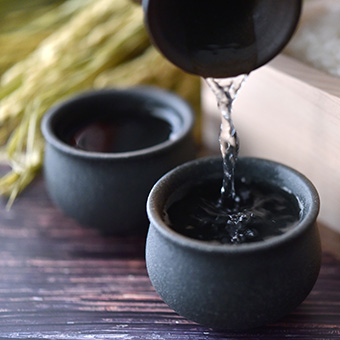
Header photo by Yukidama





No comments yet.