



Vintage Shino Matcha Tea Bowl, Japanese Matcha Tea Bowl, Chawan, Mizuno Kobaku, Shino, Haido Kiln, Unused,
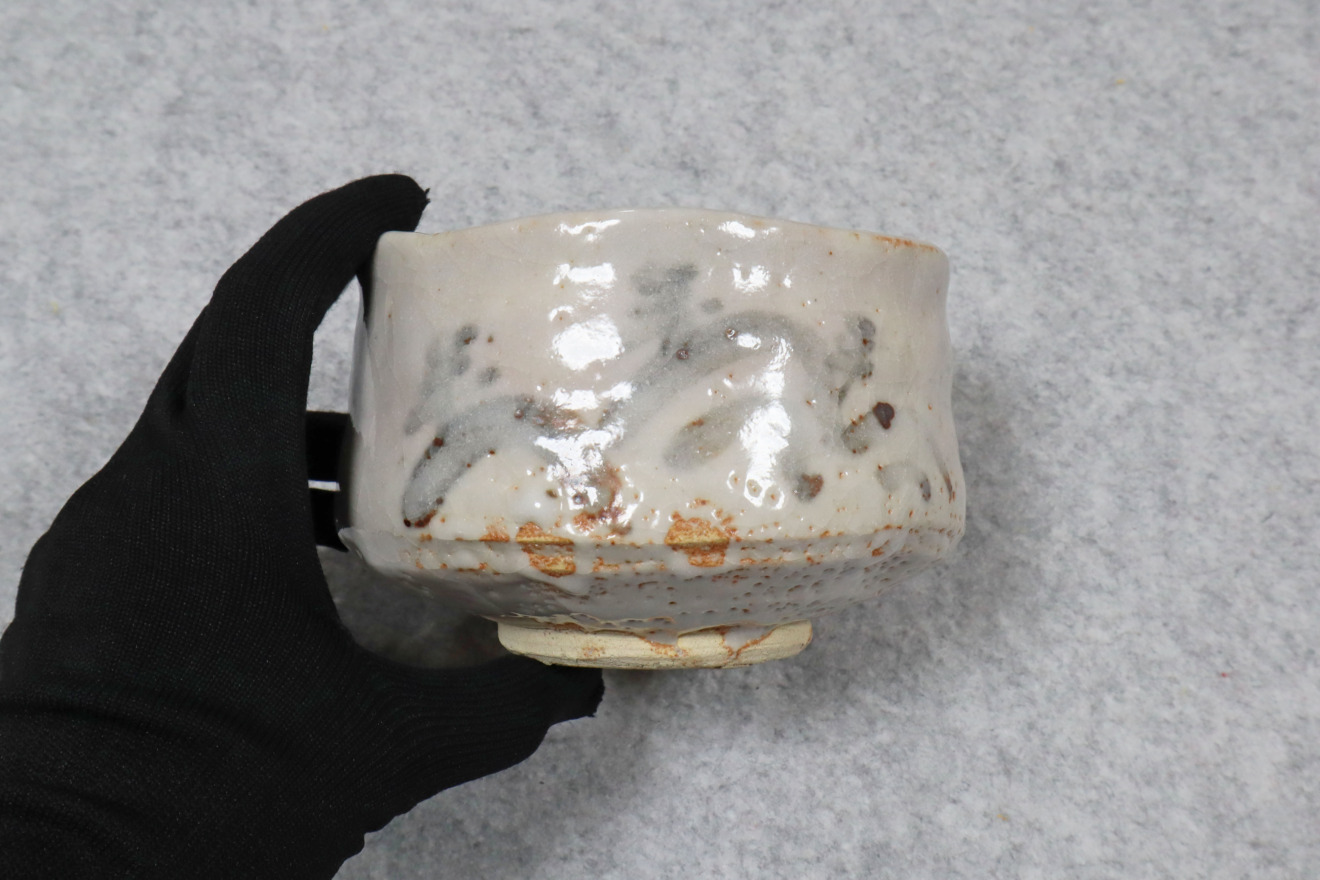
Shino ware is a type of Mino ware produced in the southeastern part of Gifu Prefecture. This type of pottery ware was usually decorated with underglaze iron painting and covered with white feldspathic glaze. The Shino kiln produced tableware which included mainly tea ceremony utensils. – Quote from A Dictionary of Japanese Art Terms
Mizuno Kobaku (born in 1921) is the third son of Kato Syuzan, who was known for Nezumi Shino. He studied under the Shino artist 29th Kato Bakutai.
Mizuno Kobaku is known for Shiro Shino (White Shino) and Aka Shino (Red Shino).
His name appears in publications on Japanese art.
This tea bowl is unused and comes with its Tomobako (original signed paulownia box), Tomonuno (original artist-stamped cloth), and an artist-provided leaflet.
It has a simple, solid form and a restrained wabi-sabi character.
Mizuno Kobaku was one of our father’s favorite artists.
Our father kept this tea bowl for many years without using it.
It is suitable for use in the Japanese tea ceremony.
Measurement
Diameter: 11.5cm -12.1cm / Approx. 4 17/32” – 4 49/64”
Width: 13.5cm / Approx. 5 5/16”
Height: 8.5cm / Approx. 3 11/32”
Thickness: 0.8cm / Approx. 0 5/16”
Weight: 441g
Age: May 1972
Material: Pottery
Color: Shino Milky White, Shino baby Pink, Shino Sunset, Shino Burnt Umber
Color (Kodai): Shino Beige
Condition: Excellent vintage condition consistent with age. (Unused)
* Kannyu (fine crackle lines in the glaze) is visible on the surface.
* Tomobako (original signed paulownia box)
* Tomonuno (original artist-stamped cloth)
* Artist-provided leaflet
* No chips, cracks, scratches, or blemishes.
* Inscription (Refer to No. 9 photo)
* Discoloration on the box due to long-term storage. (Refer to No. 10 photo)
* Wood gap on the bottom of the box. (Refer to No. 10 photo)
* The wooden lid is slightly warped. (Refer to No. 10 photo)
* Wooden nails on the box.
* Discoloration on the leaflet due to long-term storage. (Refer to No. 10 photo)
* The kodai (foot ring at the base of the tea bowl) rests on surfaces, so minor contact marks may be present.
If you have any questions about the condition or would like additional photos, please contact us before purchasing.