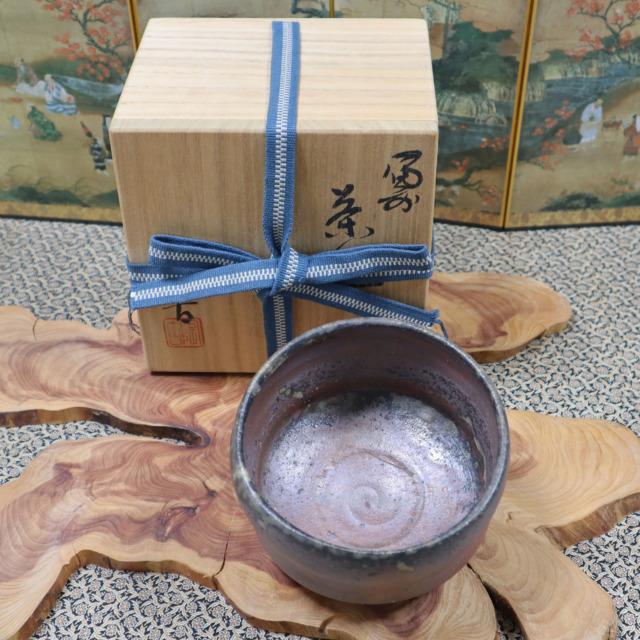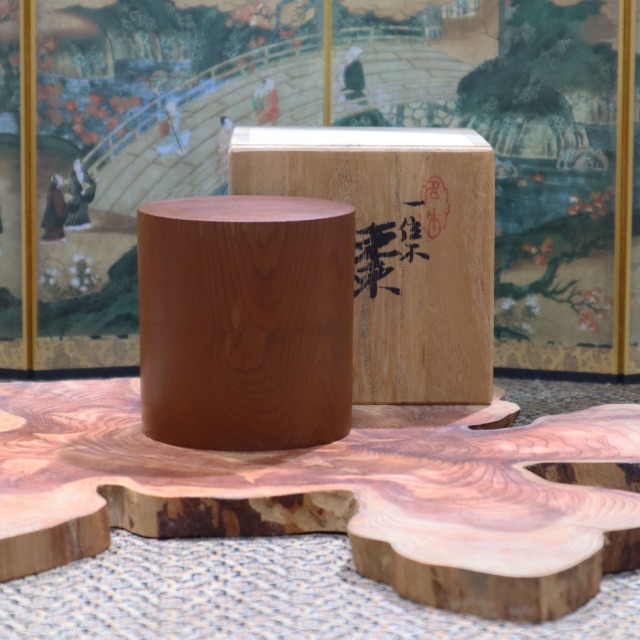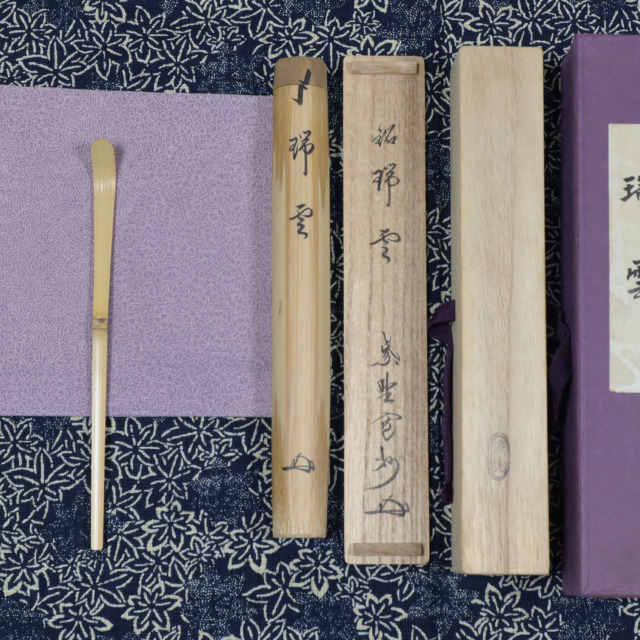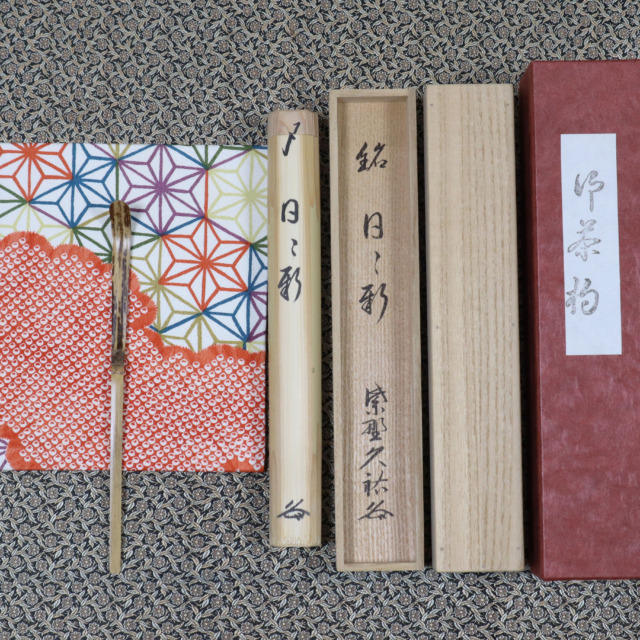



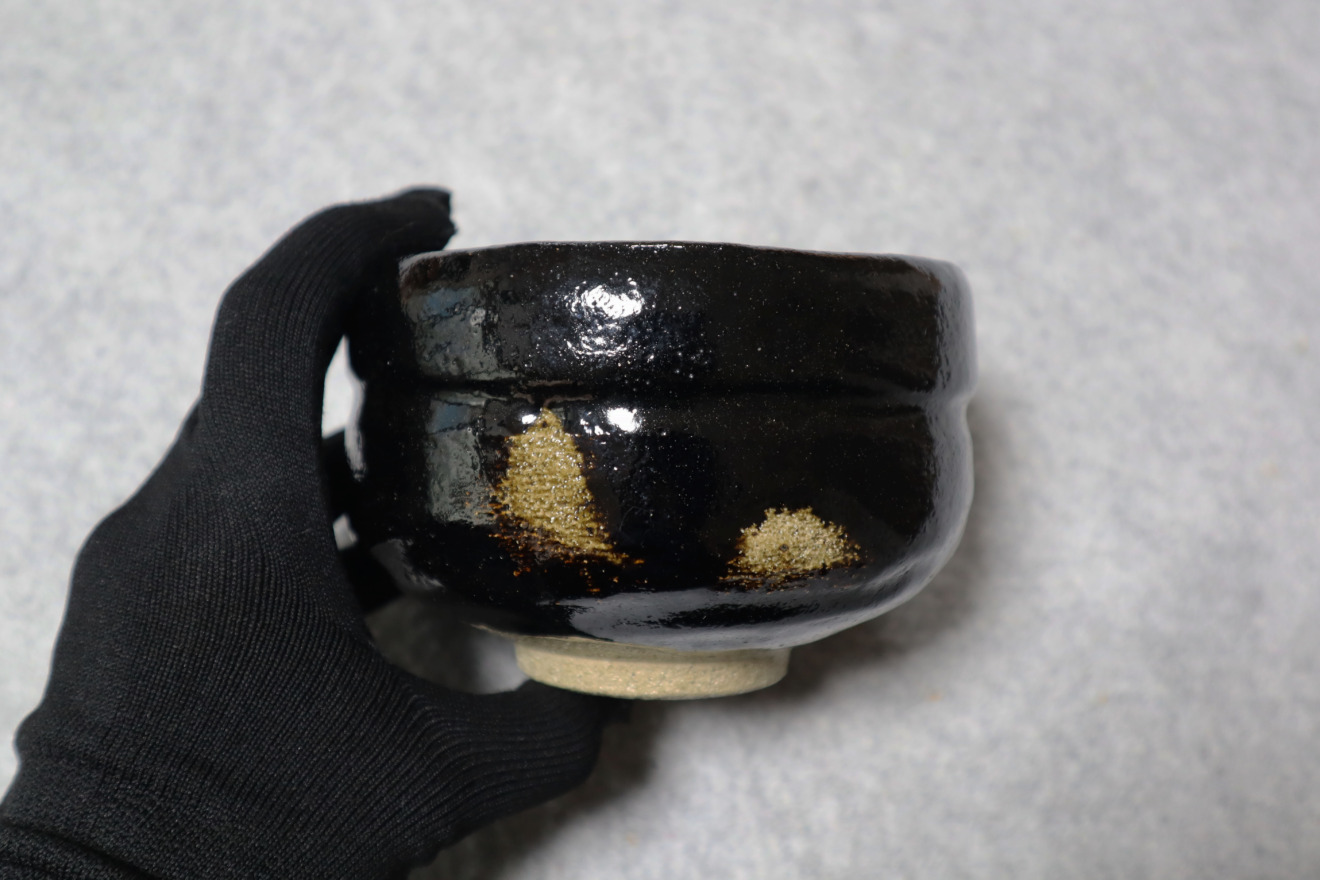

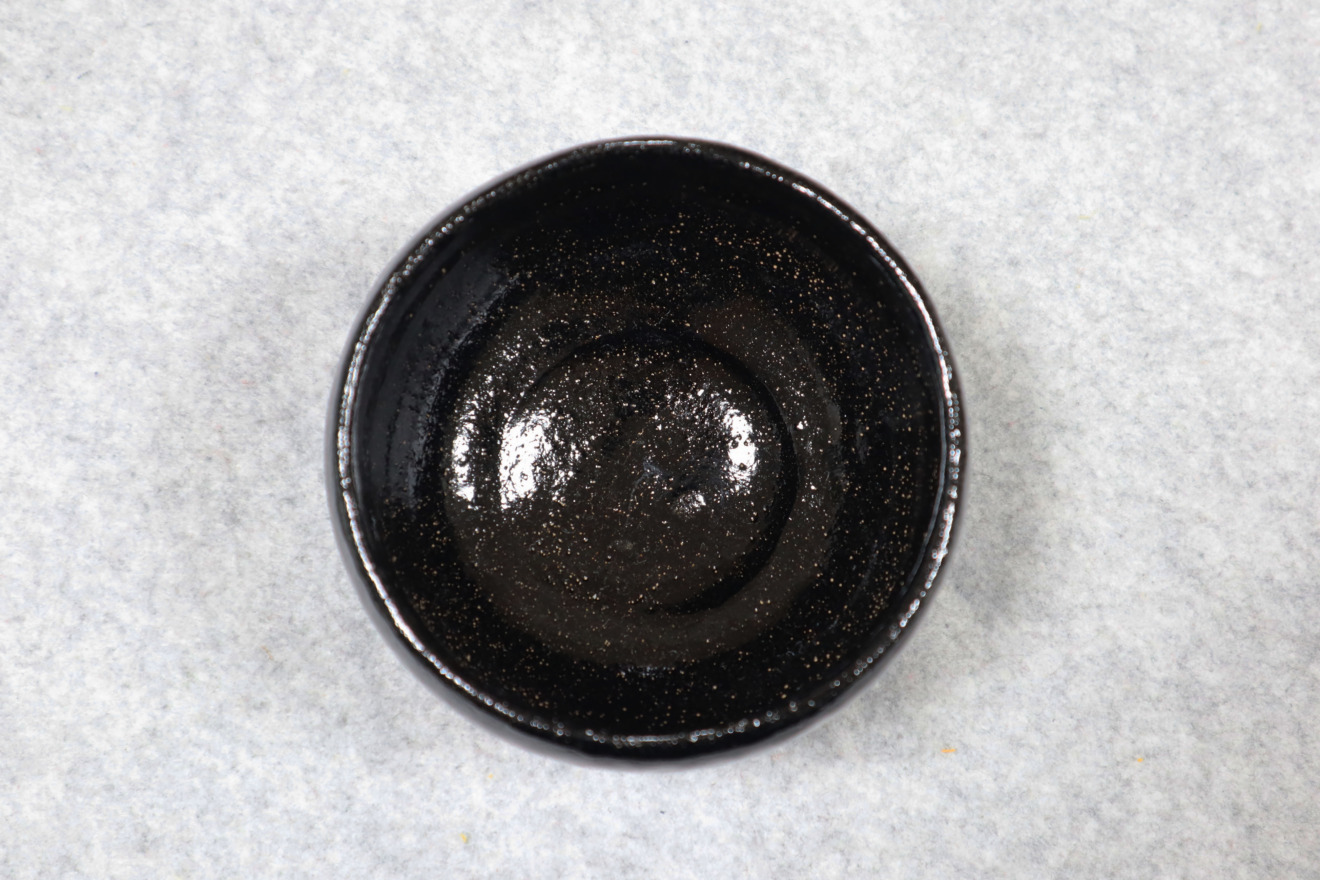

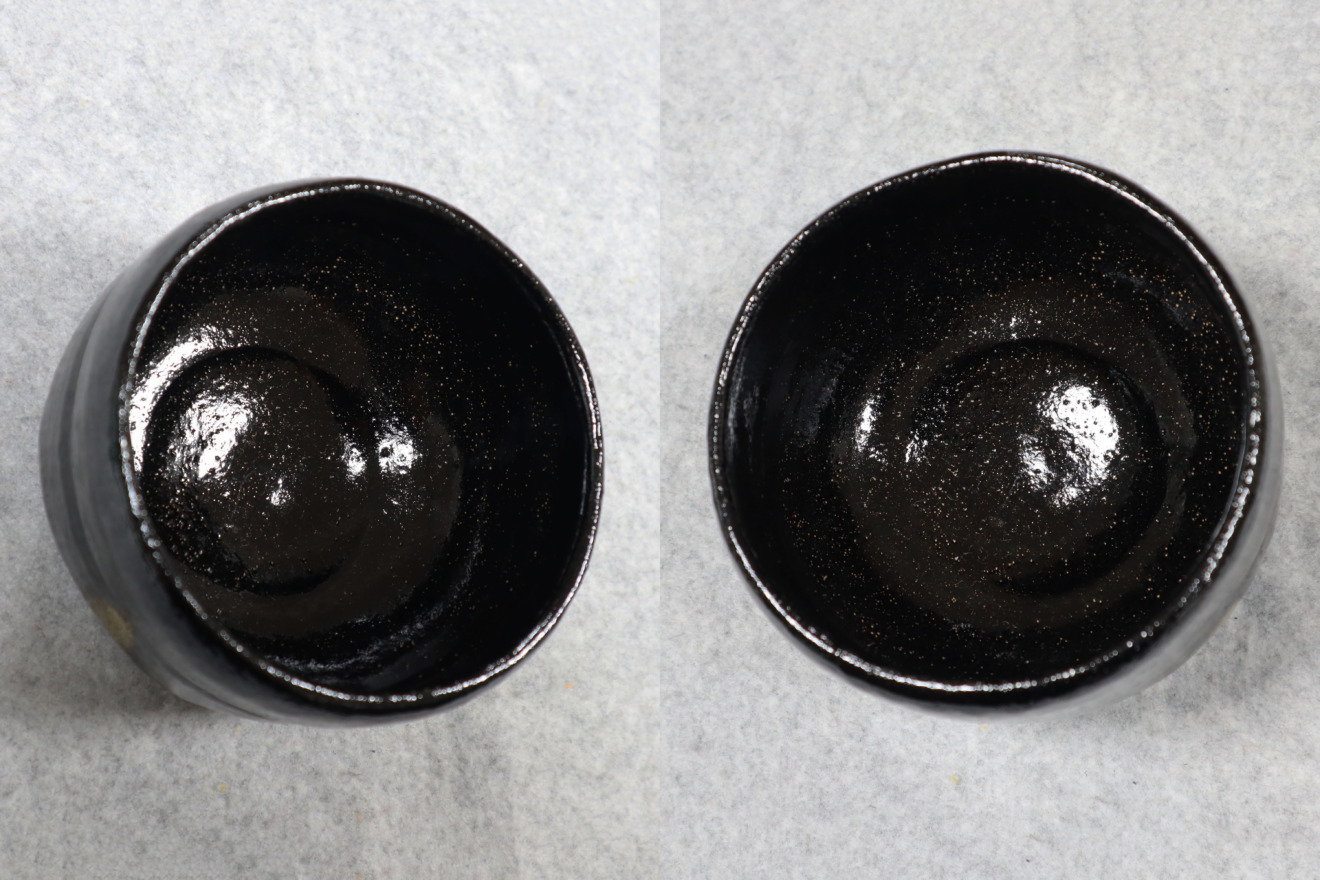


Vintage Black Raku Mei Matcha Tea Bowl, Daitokuji Temple, Takahashi Etsudo, 3rd Sasaki Shoraku, Name (Mei): Muichibutsu (Muichimotsu), Matcha Tea Bowl, Kuro Raku Chawan,
MB-041401
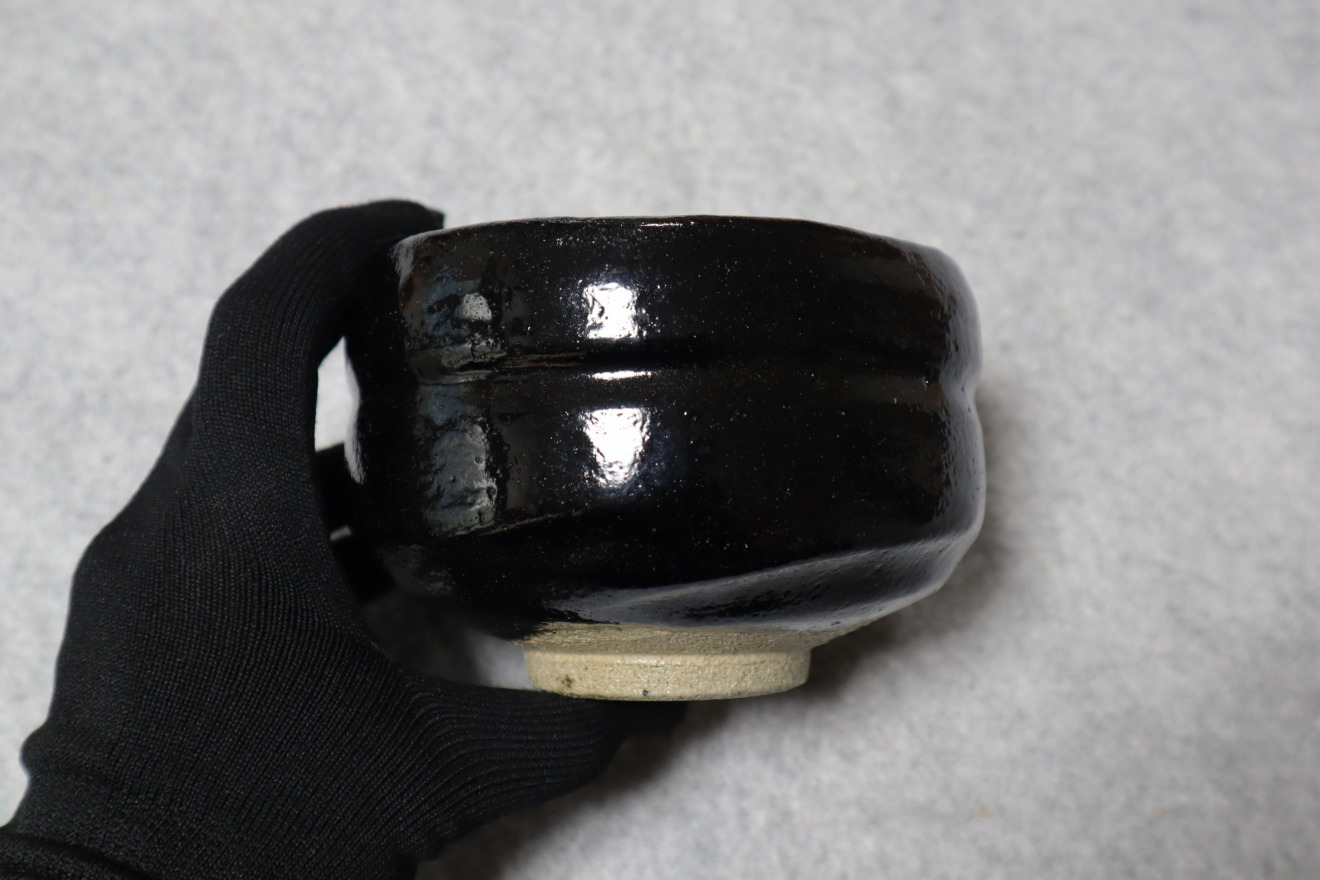
Raku ware is a type of pottery ware produced in Kyoto.
Raku ware refers to ceramics, mostly tea bowls, produced by the Raku family from the first generation Chojiro. Raku ware is formed by hand, and fired in temperatures from 700℃ to 1,000℃.
There are two type of Raku ware: the Aka-raku (Red Raku ware), which is covered with transparent glaze over a clay surface containing iron oxide, and Kuro-raku (Black Raku ware), which is covered with black glaze. The term “Raku” sometimes refers to all pottery ware made by this same process. – Quote from A Dictionary of Japanese Art Terms
The Tea Bowl was named “Muichibutsu (Muichimotsu)” by Takahashi Etsudo.
Takahashi Etsudo is one of former chief priests in Daitokuji Temple. He entered Daitokujisoudou in 1948. He studied Rinzai school and Zen under Goto Zuigan (1879-1965) and Oda Sessou (1901-1966).
Takahashi Etsudo became a chief priest of Myoujyoji in 1953.
He is one of famous priests in Daitokuji Temple.
3rd Sasaki Shoraku born in Kyoto in 1944. His mentor is 2nd Shoraku. He succeeded to 3rd Shoraku in 1962.
He is very famous Raku ware artist and known by every tea masters.
Muichibutsu (Muichimotsu) is a Zen phrase that often refers to Honrai Muichimotsu. It signifies the idea that humans are born with nothing, without material possessions or personal desires. The renowned Zen master Masuno Shunmyo explains that during one’s life, a person may lose something important and fall into despair. However, even if everything is lost, it simply means returning to one’s original self. Therefore, one can always start over, and it is always possible to begin again.
Muichibutsu (Muichimotsu) or Honrai Muichimotsu are a concept deeply rooted in Zen Buddhism. It emphasizes the idea of non-attachment and the transient nature of material possessions and personal desires. This philosophy encourages individuals to focus on the present moment and find contentment in simplicity and mindfulness. The teachings of Zen masters like Masuno Shunmyo highlight the importance of resilience and the ability to start anew, regardless of past losses or failures.
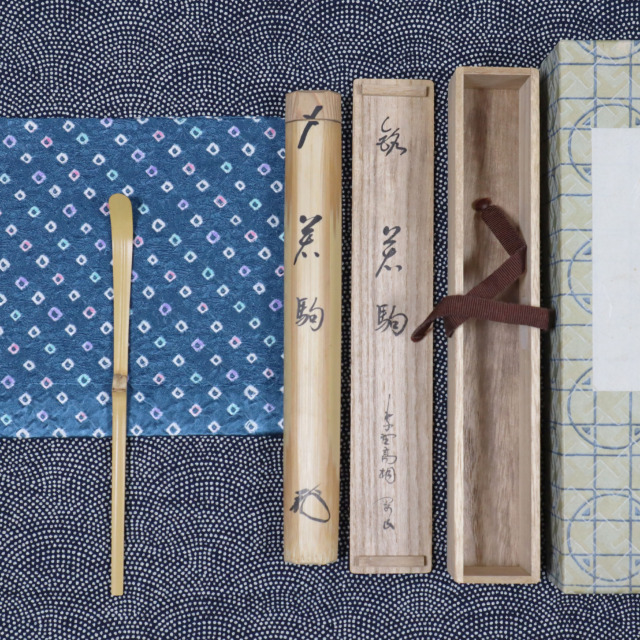
We got it from our relative. She told us she has never used it. It is still in excellent condition with original paulownia box, original clothes and original paper box. (Unused).
According to our relative, they did not use the Chawan with Daitokuji’s endorsement.
We do not see any sign of using, too.
We found tool’s mark on the surface.
It is very suitable for Zen lovers.
Measurement
Diameter: 11.5cm / Approx. 4 17/32”
Height: 8cm – 8.2cm / Approx. 3 15/64” – 3 15/64”
Thickness: 0.7cm / Approx. 0 9/32″
Weight: 352g
Age: – 2000s
Material: Earthenware, Pottery
Color: Black Raku, Cream Gray
Technique: Black Raku
Condition: Excellent vintage condition consistent with age. (Unused)
* Original paulownia box (Shihousan, wood nails)
* Original clothes
* Original paper box
* No chips, no cracks, no scratches and no blemishes.
* Inscription (Refer to No.7 and No. 9 photos)
* Almost no discoloration on the wooden box. (Refer to No. 10 Photo)
* Light discoloration and scratches on the paper box. (Refer to No. 10 Photo)
* You may find “minor scratch” on kodai (the base section of a tea bowl).
*** If you have any questions about the condition or would like additional photos, please contact us before purchasing. ***